

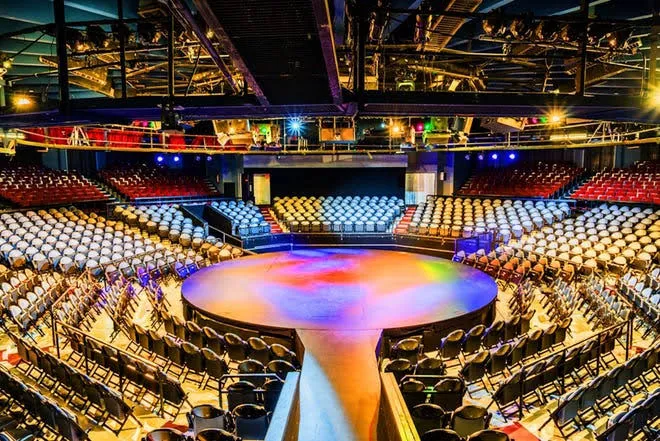
Last spring, a drama teacher I know built a spinning set from scrap plywood. It looked great for ten minutes. Then two actors and a sofa made the floor groan. Any rotating stage theatre plan needs numbers first and paint later. Weight is the part people skip.
Small venues have little room for mistakes. The stage is tight, the budget is tighter, and the crew is often three friends and a very tired volunteer. Here are the steps I would follow to keep a turntable moving, and to keep everyone calm while it does.
Start With the Real Weight
Add up everything that will ride on the stage turntable. Actors, yes. But also the sofa, the fake tree, the tea trolley, and the crew member hiding behind the wall. Write each item down. Then add a little extra, because props always multiply during rehearsals. Nobody ever removes a chair.
Weigh the heavy items on a bathroom scale if you must. Memory lies. A handy rule is to total everything, then add about a quarter on top as a cushion. That final number is the one you carry into every talk with a supplier.
Keep Heavy Pieces Central
Some makers rate a platform by weight per square meter. One standard figure is 80 kilograms. A five-meter circle covers roughly twenty square meters, so the total lands near 1,500 kilograms, spread over the entire deck. Always confirm the exact rating with your maker first.
Spread is the key word. A piano parked at the rim pushes harder than the same piano near the middle. Keep heavy pieces toward the center, and give the edge to light things like stools. If you need a rating for a single heavy point, ask separately.
Choose a Size That Fits
Bigger is not always better. Standard sizes start at five meters and climb to 26. For a small hall, five to seven meters is usually plenty. A giant circle eats the wings, and then actors have nowhere to wait. I have seen it happen twice.
Measure the stage floor, then draw the circle with chalk. Walk around it. Can a person slip behind the scenery? Can the front row still see the faces? Ten minutes with a piece of chalk saves a lot of regret later.
Slow Speed Protects Your Scenery
Speed matters more than most people expect. These platforms turn slowly, around 0.2 to 1.8 turns a minute, and bigger circles go slower still. That gentle pace keeps vases on tables and wigs on heads. Fast spins belong to fairground rides.
A soft start and soft stop help as well. The platform eases into motion instead of lurching. Your cast feels a calm glide. Any stage turntable that jerks on a hard stop will make scenery wobble, and audiences notice every wobble. Ask for variable speed control, too.
Floor, Wheels and Drive
Look closely at how it is built. Many units use friction drive and a ring of nylon support wheels underneath. The deck sits about 250 millimeters high, so plan a small ramp or steps. Bolted frames mean no welding on site, which keeps sparks away from old curtains.
The floor underneath must be flat and strong. A warped stage makes any rotating stage theatre feel cheap, however nice the paint is. Have someone check the boards or concrete before the delivery truck arrives. Bad floors are the most common surprise.
Test Early and Stay Safe
Run a test with sandbags first. Put them where the real props will sit, then turn the platform for one full circle. Listen for odd noises. Watch the edges. If something creaks on day one, it will scream on opening night. Yes, it feels silly. Do it anyway.
Teach two crew members the controls. A simple routine helps, such as pressing start first, then rotation. Stick bright tape along the edge so actors never wander off. Small habits keep a whole cast safe, and they cost almost nothing. Write the steps on a card by the switch.
Conclusion
A good rotating set starts with honest numbers. Total the weight, spread it wisely, choose a modest size, and keep the speed low. Do those four things and the load limit stops being scary. It becomes one more line in your planning notes. Boring, yes. Also very effective.
Need sizes, ratings and drawings for a real project? Visit turntablecar.com and compare what a stage turntable can carry against your own list. Then test with sandbags and book the rehearsal. Your actors will thank you, quietly, from the middle of a slow-turning circle. No rush, but start early.
